
The Keystone Berkeley and The Keystone, Palo Alto
Freddie Herrera (1935-2019) was a successful rock nightclub owner and operator for over 15 years, from 1968 until 1984. He ran a number of different nightclubs in San Francisco, Berkeley, Palo Alto and even Stockton, all using some variation on the Keystone name. It's hard enough to stay in the rock business for 15 years, much less to do it in multiple locations. Herrera's most high profile expansion was adding a Keystone in Palo Alto alongside of the Keystone Berkeley club. When it opened in 1977, the Keystone in Palo Alto was the only nightclub in the Peninsula or South Bay presenting original rock music every week, multiple nights of the week. There had been the Poppycock, in Palo Alto from 1967 through 1970, and a few successors (In Your Ear and Homer's Warehouse), but the South Bay just had beer joints and dance clubs. The Keystone in Palo Alto changed all that, and it thrived for many years.
The Keystone came to Palo Alto exactly as Silicon Valley was coming to prominence. Palo Alto, sleepy but attuned to culture, was now full of young people with money who wanted to go out, but who also wanted to go out and see something interesting. Palo Alto had no nightlife, for various historical reasons. Thus the Keystone was primed to provide that nightlife during a time when employment was booming. It seems like it was the perfect time to start a rock nightclub in the Peninsula.
And yet--it was a near thing. With no real competition, it should have been relatively easy to supply all the Keystone Berkeley acts with another gig an hour away. Something went south, however--exactly what, isn't exactly certain--and the Palo Alto operation seems to have nearly failed. Yet the Keystone survived, apparently due to Jerry Garcia's continual willingness to play lucrative shows for Herrera. Thus the Keystone in Palo Alto got through 1977, found an identity of its own, and thrived until 1985. Rock nightclub years are like dog years--eight years was a heroically long time.
The Keystone, Palo Alto: A Note On The NameThe Keystone Palo Alto is recalled by two categories of people. One category is people who lived or worked in or around Palo Alto from 1977-85, and attended shows (or at least heard about them) at the club. The other category is Deadheads, specifically those who were fans of the Jerry Garcia Band. Jerry Garcia played for Freddie Herrera and his range of Keystone clubs over 400 times, a staggering number. The Keystone Palo Alto is thus widely known by Deadheads who never saw Garcia in Palo Alto, and may have been barely alive during that period.
In fact, "Keystone Palo Alto" was not actually the original name of the club. It was "The Keystone." Freddie Herrera had initially opened the Keystone Korner in 1968, at 750 Vallejo Street in San Francisco. In mid-1971, Herrera started booking shows at The New Monk in Berkeley (at 2119 University Avenue). Herrera took over the club altogether in March, 1972, calling it Keystone Berkeley to distinguish it from Keystone Korner. Herrera sold the Keystone Korner in August 1972 to proprietor Todd Barkan, who kept the name but turned it into a jazz club. Herrera also briefly opened the Keystone Stockton in March, 1974, but it did not catch on. In late 1976, following his prior pattern, Herrera had taken over the booking of a Palo Alto rock nightclub called Sophie's, at 260 South California. In January, 1977, after a $70,000 renovation, Herrera opened the club as The Keystone.
All the ads for the club said "The Keystone" with the words "Palo Alto" following a comma, or on the next line. Since rock fans an radio djs were used to saying "Keystone Berkeley," the name "Keystone Palo Alto" fell into common use. Herrera did not discourage it, but that was not the name of the club. It did become the name of the club after a few years, but initially "Keystone Palo Alto" was a common usage that was incorrect.
 |
| 260 South California Avenue, Palo Alto, the site of Keystone Palo Alto. This photo was from the 1990s, when the club was called Illusions. |
Downtown Palo Alto Geography and Economics, 1875-1985
Back in 1875, there was no Palo Alto, just a town called Mayfield. Lincoln Avenue, Mayfield's main drag, was famous for its rowdy saloons. Railroad magnate Leland Stanford wanted to build a University nearby, at the end of his rail line, and offered to build it next to Mayfield. Since Stanford was a teetotaler, his only condition was that Mayfield close all its saloons. The town refused. So Stanford and his partner Timothy Hopkins bought up all the land just North of Mayfield and extended the Southern Pacific train one more stop. Palo Alto was founded in 1875, followed finally by Stanford University in 1893. There were no bars. All the Stanford undergraduates would go to Mayfield to have fun on Lincoln Avenue, but downtown Palo Alto became a thriving business district.
By the mid-1950s, Stanford University was struggling financially. The school was land-rich but cash-poor, and could not sell its land by condition of its charter. A forward looking Chancellor conceived of a mall, and the Stanford Shopping Center opened in 1955. It was hugely successful, but it decimated the downtown business district around University Avenue. At the same time, Stanford developed "industrial parks," college-like settings for high technology firms, and the seeds of Silicon Valley were born. Stanford University provided the brains, the likes of Fairchild-Hiller and Hewlett-Packard had the employment and Stanford Shopping Center was the desirable retail destination.
Downtown Palo Alto had nearly died, but its demise created cheap housing in the early 60s for bohemians like Jerry Garcia. There was a little folk scene in the sleepy downtown at a place called The Top Of The Tangent, and eventually the popular rock club The Poppycock, just next door. Interestingly, downtown Palo Alto still had no bars. Restaurants could serve beer and wine, but the local residents liked a quiet downtown with no hard liquor. Mayfield, meanwhile, had had to fold its tent back in Prohibition and merge with Palo Alto proper. Lincoln Avenue had become California Avenue (Palo Alto already had a Lincoln Avenue). The old Mayfield, however, was outside of downtown, so it had bars in the 1960s, a tiny link to the rowdy Mayfield of yore.
The Poppycock had closed in mid-1970, and its successor the sorta-jazz-club In Your Ear had closed after a fire on New Year's Eve 1972/73. Homer's Warehouse, near but not actually in downtown, had closed by the end of 1973. There weren't really any rock clubs south of San Francisco. The club Sophie's had opened in a1975, at 260 South California in the old Mayfield area. Although initially just a sort of dance joint with live bands, by the end of 1976 Sophie's was booking a lot of original rock acts, the kind playing Keystone Berkeley. There was nowhere else for such bands to play on the Peninsula or San Jose area.

Freddie Herrera must have noticed the perfect location of Sophie's. It was just outside of downtown Palo Alto, so it could have a full bar, and it wasn't subject to the sniffiness of old-time Palo Altans who didn't like a fuss downtown. 260 South California was near the County Courthouse, so there was plenty of unused nighttime parking. There were few residents around California Avenue, so there was no one to complain about noise and bother.
In the era before Google, it was easy to get to. One of the biggest intersections in the Peninsula (El Camino Real and Oregon Expressway) was a few blocks away, and there was simple freeway access from CA-101 (Bayshore) and I-280 (Junipero Serra Freeway). No competition for miles, easy to get to and plenty of parking. Throughout the whole South Bay, Palo Alto was perceived as "safe" at night, code for "not too many African Americans." That was true, too. 260 South California was the perfect location for a rock club, and Sophie's was already there and regularly booking acts. As I discussed in a previous post, Herrera took over the booking, and eventually the club, following the pattern he had established with the New Monk becoming the Keystone Berkeley.

The actual address of the Keystone was 260 South California Avenue. Yet all the ads for the club say "260 California." There is a North California Avenue, but it is across the train tracks, and only long-time residents are aware of it. For anyone who didn't live in Palo Alto, "California Avenue" was the commercial district bordered by El Camino Real, Oregon Expressway and the Railway Station, and saying "South California" was just asserting local snobbiness, a known character defect of Palo Altans. Whenever you see someone asserting that the Keystone was at 260 South California, that's just a Palo Alto local signaling to other Palo Altans in a secret code. So, yeah, the Keystone was at 260 South California.

Keystone, Palo Alto Performance Listings: January 20, 1977-July 30, 1977
January 20, 1977 Keystone, Palo Alto, CA: Sass (Thursday)
Freddie Herrera was following the plan that had worked at Keystone Berkeley. Back in 1974, Herrera had briefly opened a branch of the Keystone in Stockton, but it only lasted a few months. While the "oil shock" recession probably was a factor, Herrera had been trying to develop a club in uncharted territory. It hadn't worked out. In the case of Sophie's, the groundwork had been laid out. The owner of Sophie's, Ken Rominger, had stayed on as manager. Since there was already a club, and some patrons, some of the mechanical business that any club must deal with--parking, noise, cops, food delivery and so on--was already taken care of. Per a later article by San Francisco Chronicle writer Joel Selvin, Herrera put $70,000 into renovations. That was a lot of money for 1976. My guess was that a big part of that was upgrading the sound system.
On Thursday, January 20, 1977 the Keystone opened in Palo Alto with the band Sass. Sass was actually a Top-40 type band who had regularly played Sophie's. In fact, it was smart to have a soft opening on a weekend with a familiar band. The last show at Sophie's had been the weekend before (January 14-15, 1977), with Commander Cody and His Lost Planet Airmen, longtime veterans of the Keystone Berkeley.
In Berkeley, the Keystone was primarily advertised with ubiquitous flyers, visible on every telephone pole in the city. The flyers had a monthly calendar of upcoming shows. Patrons could also get the flyers mailed to them. Palo Alto had flyers, too, but there far fewer bulletin boards in the city. Both Keystones advertised in the San Francisco Chronicle Datebook (Pink Section), in the same ad block. The "Pink Section" was how most Bay Area rock fans figured out their live music plans, anyway.
The first weekend show at Keystone was John Lee Hooker. Hooker had been a regular performer at Keystone Berkeley since it had opened, and in any case had played for Herrera before that. Herrera himself loved the blues, so he had booked blues artists consistently. By 1977, white rock fans were the fans who were listening to blues players anyway. Hooker, in fact, lived in the hills above Redwood City, so driving down for a night was an easy thing. He had a regular band to back him, even if it may have had shifting membership.
John Lee Hooker (1912-2001) was from Mississippi, via Memphis and Detroit. He had been recording since 1948, and had gained notoriety in the 60s, when bands like The Animals and Canned Heat had made some of his songs famous, like "Boom Boom" or "Boogie Chillen." In '77, however, he was at a low ebb, as were most classic bluesmen at the time. He had not released an album since 1973, nor would he until 1979. In that respect, Herrera did a lot for Hooker and other bluesmen, giving them a consistent audience and paying gigs.
The Keystone had a very different configuration than Keystone Berkeley. Keystone Berkley was a big, rectangular room. Initially there had been some long tables, but they were mostly gone by 1977. The Berkeley club was pretty much a stage and a dance floor, with some pillars in the middle. There were some benches along the wall, and a tiny balcony with a few tables and the soundboard. The Berkeley club only sold beer and wine. Nominally, there was food, but that was just a dodge (for many years, the only food in the "restaurant" was popcorn, to fulfill the license obligations). Keystone Berkeley generally featured loud bands with long solos and lots of dancing, because pretty much everyone had to stand up. If you sat along the wall--assuming you could find a seat--, you could only see the stage if the club was deserted. So Keystone Berkeley favored bands that had audiences who were all on their feet.
In Palo Alto, the Keystone had a little dance floor in front of the stage. But the tables were around the club in a series of circular risers, so even sitting in the back you had a chance to see the stage. Palo Alto also served food and hard liquor. While Keystone Berkeley had no real food, there was a thousand places to eat downtown. In 1977, South California Avenue just had a lot of lunch places. If you wanted to see a show after work, coming to the Keystone for dinner was a real option. With tables and drinks, it was a real option for a date, too, even if dancing wasn't in the plan. So the Keystone had a different footprint than Keystone Berkeley. I'm not sure of the official capacity in Palo Alto. I think it was around 500. I'll bet it was quietly exceeded on occasion, particularly for a band whose fans were willing to stand.
January 22, 1977 Keystone, Palo Alto, CA: "Call For Details" (Saturday)
Keystone Berkeley regularly advertised shows on their calendar that said "Call For Details." Usually the band were well-known Keystone regulars who could not advertise their shows for a contractual reason. Since "Call For Details" never applied to Jerry Garcia, the most likely suspects would be Tower Of Power or Elvin Bishop, both long-time performers for Herrera in Berkeley or San Francisco.
While advance tickets for Keystone shows were now generally available at the computerized BASS outlets (a forerunner of Ticketmaster), most people decided to go the Keystone on the night of the show. The FM rock radio stations all had an entertainment calendar at around 5:30, where they would announce who was playing where. The odds were that whoever could not be advertised on a flyer a few weeks in advance could be announced on the radio the night of the show.
The Jerry Garcia Band debuted at the Keystone on its first Sunday night. Garcia had already played numerous times for Herrera in San Francisco and Berkeley, and had played Sophie's a number of times as well. Garcia was critical to the success of the Keystone empire. For one thing, Garcia often played on weeknights, packing the place on a night when a club might otherwise be pretty quiet. Also, as you might expect, Garcia's fans came early and stayed late, buying plenty of drinks along the way. Finally, Deadheads were a mellow bunch, and there were almost never any security issues with the crowd. Deadheads enjoyed their beer, yes, but they had other methods for getting their buzz on.
While the Keystone flyers advertised computerized BASS tickets for most shows, that usually did not include Garcia Band shows. This is why, incidentally, there are no Jerry Garcia Band ticket stubs from Keystone Berkeley or from Palo Alto (there did start to be computerized Garcia tickets around 1985, and they may have been used once or twice before that). This arrangement was attractive for a couple of reasons. First of all, Garcia could book shows at a Keystone, and then cancel or re-schedule them at will. No refunds had to be given. Nor were fans upset, really--if Garcia canceled, he'd be back next month anyway. Also, with no advance sales, everything was all cash and club owners and musicians like it that way.
Michael DeJong is unknown to me. The Jerry Garcia Band very much preferred acoustic opening acts who did not interfere with their stage set up. At a Keystone, while the opening guitarists were sometimes quite good, their presence didn't affect attendance one way or another.
January 24, 1977 Keystone, Palo Alto, CA: The Skins/Frank Davis (Monday)
The Skins and Frank Davis are unknown to me.
 |
| The Cornell Hurd band ca 1977 (successor to the Mondo Hotpants Orchestra) |
January 25-26, 1977 Keystone, Palo Alto, CA: Cornell Hurd and His Mondo Hot Pants Orchestra/The Skins (Tuesday and Wednesday)
Cornell Hurd was a guitarist and singer from nearby Cupertino. Along with partner Frank Roeber, he had formed an early 70s country band called the El Rancho Cowboys. in Berkeley, the pair met Asleep At The Wheel, newly relocated from Paw Paw, WV and playing Western Swing music. The El Rancho Cowboys broke up, and Hurd took a trip to Amarillo, TX. He heard real Texas showbands and was also interested in 20s music, so he put together a band to play Texas Dance Hall music with a 1920s flavor.
Cornell Hurd and His Mondo Hot Pants Orchestra played original music (save for a hillbilly version of a Barbara Streisand classic, re-titled "The Way We Was"). It would have been a good fit for the Keystone, though, because it was built for dancing and probably sold a lot of drinks. The Cornell Hurd Orchestra was a large group (around 10 players, apparently), and worked off and on during 1976 and '77. Ultimately Hurd moved to Austin, TX, where he was a popular performer for decades.
January 27, 1977 Keystone, Palo Alto, CA: John Handy and Hard Work/Head (Thursday)
John Handy (b.1933) was a well know alto saxophonist. He had made his name playing with Charles Mingus in the 1950s. In the 60s he had led some well-known combos of his own. From the 1970s onwards, he was an educator as well as musician, teaching at Stanford, UC Berkeley, the San Francisco Conservatory and elsewhere. At this time, Handy lived in Palo Alto, so this would have been a convenient local gig.
Handy's current album was Hard Work, released in 1976 on Impulse. It had reached #4 on the Billboard jazz chart. Hard Work had some R&B influences, like a lot of contemporary jazz, but Handy was fundamentally a jazz player. In any case, Palo Alto didn't really have any jazz clubs, so the Keystone was a good place for him to play. Since the club had tables and chairs, it was a better site for jazz than the Keystone Berkeley.
Head is unknown to me.
 |
| Greg Kihn's debut album on Beserkeley Records, released in 1976. In the background is Rather Ripped Records, where Kihn worked at the time (and where I regularly shopped) |
January 28-29, 1977 Keystone, Palo Alto, CA: New Riders of The Purple Sage/Greg Kihn (Friday-Saturday)
The New Riders of The Purple Sage were inextricably linked with the Grateful Dead, even though by 1977 they were professionally actually pretty distinct from them. Country rock had been a coming thing when Jerry Garcia had helped found the Riders in 1970, but the genre had since been eclipsed by "Outlaw Country," long-haired and rebellious, and pro-weed, but really actually from the countryside rather than the suburbs. The promising songwriting of the first few Riders had also faded. By early 1977, the band was still enjoyable live, but they were treading water.
John Dawson and David Nelson still fronted the band. The mighty Buddy Cage still had the pedal steel chair, with Spencer Dryden on drums. New bassist Stephen Love also sang and wrote. The band's previous album, their first for MCA (called New Riders) had bombed in 1976. They would have a new album shortly, Who Are Those Guys, which would be their best album in a while. It was produced in Nashville, and was mostly all covers, which took away some of the unique sound of the band. Deadheads still liked the New Riders, but on stage they did a lot of the same songs they had always done, so the band didn't draw in the Bay Area anything like they used to.
Berkeley's Greg Kihn, however, was on the rise. Originally from Baltimore, Kihn had moved to Berkeley in 1974. He worked in a cool record store (Rather Ripped, on Northside) and originally played in some local folk clubs. He had recorded some tracks with the Berkeley band Earth Quake, and Earth Quake's manager had released an album on his own label. Beserkeley Chartbusters featured songs by Earth Quake, Kihn and Johnathan Richman, among others. Kihn wrote sensitive pop songs, but they had a poppy, 60s sheen to them, like The Kinks, instead of the fingerpicking folkie sound of Southern California songwriters.
By 1976, Kihn had recorded his debut album, Greg Kihn, also released on Beserkeley. In 1977, the Greg Kihn Band was playing around the clubs. Kihn was joined by lead guitarist Dave Carpender, bassist Stevie Wright and drummer Larry Lynch, all veterans of various Berkeley ensembles. The group rocked pretty hard, but they kept the solos short and had nice harmonies to go with their catchy hooks. The Greg Kihn Band would go on to have great success over the next decade.
January 30, 1977 Keystone, Palo Alto, CA: Ball, Taylor and Hatshek (Sunday)
Ball, Taylor and Hatshek are unknown to me, beyond numerous club listings [DKS found that the band played original material as well as Eagles and Steely Dan covers].

January 31-February 1, 1977 Keystone, Palo Alto, CA: Upcoming Talent (Monday-Tuesday)
January 31, 1977 Keystone, Palo Alto, CA: Mirage
February 1, 1977 Keystone, Palo Alto, CA: Dream
In the late 60s and early 70s, a lot of nightclubs had "Audition Nights," usually on a Monday or Tuesday. It was a holdover from "Hoot Nights" in folk clubs. Some bands would play, there was usually no cover charge, and the bands probably didn't get paid. If they went over OK, the club owner would book them for an opening slot on a better night of the week. The January 31 listing in the Examiner was the only time I have found the Keystone listing acts in this way.
A couple of things had changed in the preceding decade. For one thing, housing prices in the South Bay (and indeed much of the Bay Area) were pretty high, thanks to Silicon Valley. The old scenario where some young hippies could rent a house together, live cheaply (supported by their girlfriends' waitress jobs) and rehearse in some deserted warehouse was no longer financially viable. There was cheap housing in East Palo Alto, of course, but white rock bands weren't going to rent in a mostly African American neighborhood, even if it was just across the freeway from Palo Alto proper.
Another significant change was more mundane: cassette tapes. By 1977, every nightclub or booking agent had a cassette player, and bands could get heard by just mailing a cassette. Sure, the sound quality might not be or record-release quality, but it could be listenable. There wasn't as much need or value for a band to lug all their gear to a club to play for a club owner, when they could do it by dropping off a tape. So "Audition Night" was never a thing at the Keystone in Palo Alto.
The February calendar listed the bands. Mirage and Dream are both unknown to me.February 2, 1977 Keystone, Palo Alto, CA: Willie and The Wild Bunch (Wednesday)
Willie and The Wild Bunch are unknown to me.
February 3, 1977 Keystone, Palo Alto, CA; Stoneground/John Hammond (Thursday)
Stoneground had been formed in 1970, primarily for a Tom Donahue-financed movie called Medicine Ball Caravan. The movie was supposed to be a sort of "traveling Woodstock," featuring the Grateful Dead going across the country. At the last minute, the Dead had dropped out due to shaky financing, and the actual tour and movie were a mess. Still, Stoneground was an interesting band with five lead singers and a rocking rhythm section. They had recorded three albums for Reprise, but ultimately broke up in early 1973.
Lead guitarist Tim Barnes had reformed Stoneground in early 1974, however, and the band had stayed together since. By 1976, Stoneground had self-released their own album, Flat Out, and toured relentlessly. They would ultimately get picked up by Warner Brothers in 1978 (where they would release the album Hearts Of Stone). I think in 1977 they featured singers Annie Sampson and Jo Baker (who was ex-Elvin Bishop Group), along with Barnes on vocals and lead guitar. Stoneground was actually a pretty good club band, but a lot of people in the Bay Area had seen them on nightclub bills or opening at Winterland for almost a decade, and it didn't neccesarily make them seem intriguing
Blues guitarist John Paul Hammond, the son of the legendary Columbia producer, had been at it a lot longer than Stoneground. He had released his first album back in 1964. Hammond had played in various configurations, but at this time he was mainly a solo performer. His most recent album would have been Solo, released in late 1976 on Vanguard. The album had been recorded live back on July 23, 1976.
Marin County's Sons Of Champlin were in their twelfth year together. The founding pair of Bill Champlin (lead vocals and organ) and Terry Haggerty (lead guitar) had been there at the beginning, and Geoff Palmer (keyboards, vibes) had joined in 1967. The other members (Jim Preston on drums, Rob Moitoza on bass and Steve Freidani and David Farey on horns) were more recent, but they had all logged a lot of time together. The Sons always got great reviews and had a loyal fan base, but they couldn't get over a certain level of popularity.
The Sons had released a number of fine albums in the 60s and 70s, but record companies had lost interest. So the Sons took the step of releasing their own album in 1974, a step many other local bands were taking, and it revitalized interest in the band, and got them signed to Ariola Records. In early 1977 they would release their second album on Ariola, Loving Is Why. The Sons were as sophisticated as ever, but they were emphasizing some funkier R&B sounds underneath the flying solos of Haggerty, Palmer and the horn section. They had played Keystone Berkeley numerous times. They had also played a lot of shows in the Palo Alto area, so they had a local following.

February 5, 1977 Keystone, Palo Alto, CA: Ruby/Skycreek (Saturday)
Saturday night featured Ruby, the band led by former Creedence Clearwater Revival founding member Tom Fogerty. They had just released their second Rock and Roll Madness on PBR International Records. Other band members were Randy Oda (joining Fogerty on guitar and vocals), Anthony Davis on bass and Bobby Cochran on drums. Of course, brother Tom, while a solid musician, wasn't anything like the hitmaker that his brother John had been. I also doubt they played many or any Creedence songs.
A characteristic of early Keystone bookings was that they featured bands or players that had been around for a while. Now, that didn't neccesarily make them bad bands. The Sons, for example, had a very contemporary sound and only played the occasional 60s oldie. From the point of view of prospective club goers in Palo Alto, however, names like The Sons, Jerry Garcia or a Fogerty didn't shout "new and happening" and I assure you that mattered in 1977 Palo Alto. Of course, it's also true that the rock fans who wanted dinner and a drink were older than college students, but not all of them were going to like old hippie music, either.
Skycreek had played regularly at Sophie's, and appears to have been a country rock band [update: David Kramer-Smyth confirmed that Skycreek was a country-rock band from the Peninsula]
The Jerry Garcia Band returned for another Sunday night, no doubt packing the Keystone on a night that would otherwise have been pretty light. The Garcia Band lineup at the time had fellow Grateful Dead members Keith and Donna Godchaux on piano and vocals, respectively, JGB "Straw Boss" John Kahn on bass and Ron Tutt on drums. Tutt also drummed for Elvis Presley, so the touring schedules of the Jerry Garcia Band had to conform to both the Grateful Dead and Elvis Presley. Quite the iconic intersection.
Garcia had played Sophie's with some regularity, so his appearances at the Keystone drew little attention in Palo Alto outside of the narrow, devoted circle of local Deadheads. In fact, a good argument could be made that the regular presence of the Garcia Band did not really help the Keystone's image. Palo Alto is the ultimate town for looking down on last year's fad, or acting too cool for school about anything popular anywhere else. It was very 1977 Palo Alto to look down on the Grateful Dead as over the hill. It was all the easier since locals could say things like "my sister had Bill Kreutzmann as her graduation partner" or "I took guitar lessons from Jerry at Dana Morgan's." Palo Altans had long hair and liked to smoke weed, of course, but the whole hippie thing had come first to Palo Alto, and the town liked to claim to be over it. So the regular Keystone bookings of Garcia (and the New Riders, and old Fillmore bands) made it seem like just a joint for old hippies. In Palo Alto, that sort of thing never helped.
February 7, 1977 Keystone Palo Alto, Palo Alto, CA: East Bay Hotline with Frank Biner (Monday)
Frank Biner was a soulful guitarist and singer who had moved from Chicago to the East Bay in the 1960s. He played the Keystone Berkeley and other clubs regularly, and he worked with members of Tower Of Power. It was logical that Herrera would let Biner build an audience in Palo Alto. From what I know, although Biner's material was original, it was funky and good for dancing, so it fit the casual Monday night vibe anyway. In the early 70s, his bands were called Night Shift and then Oakland Stroke, and it seems to have evolved into East Bay Hotline but I don't really know who actually played in the band.

February 8, 1977 Keystone, Palo Alto, CA: Asleep At The Wheel/Moonlighters (Tuesday)
Asleep At The Wheel had been founded by guitarist and singer Ray Benson in the Washington, DC area around 1970. He put together a fairly large ensemble that played Western Swing music with a long-haired hippie sensibility. By 1971, they were based in Paw Paw, WV. In 1972 they opened for Commander Cody and His Lost Planet Airmen, perhaps the only other band remotely similar to them, and the Airmen encouraged them to move to Oakland, which they did. Asleep at The Wheel played almost every night in the Bay Area from 1972-74, at the Keystone Berkeley, Homer's Warehouse, the Long Branch and numerous other joints. In 1974, Benson and Asleep At The Wheel moved to Austin, TX, where they have thrived to this very day.
Nonetheless, when they reappeared in the Bay Area on their endless touring, I'm confident they could still pack them in. Their current album would have been Wheelin' and Dealin', released on Capitol Records in 1976. It would have been the band's second album on Capitol, but their fourth overall (with one on UA and another on Epic). The Wheel typically toured with three fiddles and a horn section, so they could really light up a club.
The Moonlighters had started out as a part-time ensemble featuring some members of Commander Cody's Lost Planet Airmen. They were led by guitarist Bill Kirchen (from the Airmen) and singer Tony Johnson, and iat times included various other Airmen. Their sound was "Rhythm and Western," in line with the Airmen but not identical. By the end of 1976, the Airmen had broken up and the Moonlighters became a full-time band. The Moonlighters would release their debut album on Amherst Records sometime in 1977. Just to confuse matters, the Moonlighters then signed up to back Commander Cody on tour, a relationship which lasted many years.
February 9-12, 1977 Keystone, Palo Alto, CA: Powerhouse (Wednesday-Saturday)
Powerhouse, as far as I can determine, appears to have been a Top 40 dance band. Now, the Keystone was a new club, and there were probably a lot of Sophie's customers who liked to pay a buck, drop in for a beer and maybe meet someone interesting. The calendar (above) says "Highest Energy Top 40 Disco Band in the Bay Area."
But it's odd that an experienced club operator like Herrera booked a Top 40 band for four nights, including the weekend. Given that there were problems later--we'll get to that--it's possible that Herrera's inability to book an original rock act was an early indicator of problems. I suspect that, initially at least, these problems had to do with money, and Herrera couldn't meet the prices that the bands wanted. I don't think there were as many club bands in the Bay Area as there had been a few years earlier, and the groups may have been less available. Herrera was established, but Keystone Palo Alto was still new.
February 13, 1977 Keystone, Palo Alto, CA: Baby Fat with Big Mitch (Sunday)
Baby Fat with Big Mitch was another local Top 40 band. They were advertised fairly regularly in the Pink Section, but in the kind of Peninsula clubs that sold a lot of drinks to people who wanted to meet other people. This booking actually makes sense for a Sunday night at Keystone, but along with the Powerhouse booking it's a whiff of teething problems at Keystone (the calendar has Powerhouse on Sunday, but the Examiner has Baby Fat).
I suppose that I should note that I was actually introduced to Big Mitch once, although I didn't yet know who he was. A close friend and his older brother ran a "teen" nightclub (The My-Oh-My, for you old Palo Altans), and for a reason I no longer recall, we went to Redwood City or somewhere so his brother could meet someone. We went to this restaurant/'nightclub" type place, and the person meeting the brother introduced us to a football-player sized guy in a suit as "Big Mitch." We didn't stay long (the meeting was about something mundane, like restaurant furniture, and I was just along for the ride), and it was only later that I realized Big Mitch was a local celebrity of some kind, and we were supposed to have been impressed. In any case, Big Mitch played around the Bay Area for years.

February 14-15, 1977 Keystone, Palo Alto, CA: Tom Petty and The Heartbreakers/Greg Kihn (Monday-Tuesday)
After some unimpressive bookings, the Keystone had a couple of memorable nights. The question that is hard to answer at this remove is whether anyone actually attended these shows. It's an important question, from my perspective. If the Keystone was catching on as a place to see bands, this would have been the kind of show that would have made it so. Based on subsequent events, I suspect this show was very thinly attended (notwithstanding all the old Palo Altans who will swear they were there both nights).
We now think of Tom Petty and The Heartbreakers as "Classic Rock," and certainly they thought of themselves as that (notwithstanding the term "Classic Rock" hadn't been invented, it was just "Rock"). Strange as it may seen, though, when their debut album was released by Leon Russell's Shelter Records in November, 1976, Petty and the Heartbreakers were sort of lumped with the likes of Elvis Costello and Blondie. You would hear Petty on late night FM radio, and a few people had the album, but they weren't yet a hit. The first hit off the album was "Breakdown" and that did not reach AM radio until later in 1977, and "American Girl" was later than that. So in February 1977, Tom Petty and The Heartbreakers were under the radar.
An act like this, on its way to fame and fortune, was the kind of booking that made everyone remember a club as the place to go. That's why it's such an interesting, if hard to know, question of whether people actually went. Petty would have been touring around, and two nights in Palo Alto, even if the pay was slight, was better than not working.
Greg Kihn was back, two weeks after opening the weekend for the New Riders. The Greg Kihn Band would play the Keystone many, many times, so these opening act bookings were part of a strategy that worked for his career.
February 16, 1977 Keystone, Palo Alto, CA: East Bay Hotline w/Frank Biner (Wednesday)
February 17, 1977 Keystone, Palo Alto, CA: Sunsmoke (Thursday)Sunsmoke is unknown to me. [David Kramer-Smthyth found an ad for them, Sunsmoke were a Latin/Disco band]. Since this was a Thursday, I am assuming they were a kind of Top 40 dance band. The February calendar, printed long before the Examiner listings, had the band Duck Butter (unknown to me). The tag is "Fastest Breaking Dance Band From Monterey"
February 18-19, 1977 Keystone, Palo Alto, CA: Albert King/Duck Butter (Friday-Saturday)
Guitarist Albert King had been playing for Freddie Herrera since at least 1972. Back in the 60s, Albert had come to national attention because Cream had covered his song "Born Under A Bad Sign." Albert King had played both Fillmores, and headlined many times in the late 60s and early 70s. Now, hippies reflexively praised blues musicians--"Eric loves the blues, man"--but by the late 70s they weren't really buying albums by Albert or BB King. At this time, Albert's current albums would have been King Albert on Tomato, and The Pinch, on Stax. I'm not sure how recently either had actually been recorded.
All that being said, I saw Albert King at the Oakland Estuary Park in 1990, and he absolutely killed it, so I don't doubt he laid it down hard in Palo Alto.
February 20, 1977 Keystone, Palo Alto, CA: Ruby/Skycreek (Sunday)
February 21-22. 1077 Keystone, Palo Alto, CA: Nimbus (Monday-Tuesday)
Nimbus was a band from either Fremont or Hayward. They played sort of psychedelic boogie music, if that's a category. They had been around since the early 70s. I actually saw them once, opening for Hawkwind (in 1978). They weren't bad, but they didn't stand out.
February 23-26, 1977 Keystone, Palo Alto, CA: Dream Theater (Wednesday-Saturday)
Dream Theater is unknown to me. The calendar says "From The Big Apple." Were they a cover band, or an original group? The "prog metal" band named Dream Theater did not form until 1985.
February 27, 1977 Keystone, Palo Alto, CA: Mistress/Iron Curtain (Sunday)
Mistress had been around the Bay Area off an on since around 1973. Guitarist Greg Douglass was the primary driver. Douglass had been in various Bay Area bands, mainly a Fillmore era group called Country Weather. When Country Weather faded away in early '73, Douglass had formed Mistress. It's not exactly clear who exactly was in the band at that time. Douglass also played with various other musicians, most notably with Hot Tuna. Douglass' slashing slide guitarist made for some great Tuna shows in the first half of 1975. Douglass also worked a lot with the Steve Miller Band, playing on the famous album Book Of Dreams, recorded in 1976. Douglass co-wrote the song "Jungle Love," but the single would not be released until August 1977 (it would reach #23).
Mistress played a kind of dual-guitar hard rock, rare for San Francisco bands, but very much in the vein of English bands like Mott The Hoople or Wishbone Ash. Of course, even English rock music had moved away from that sound, so I think Mistress' sound was a little bit retro in any case. As near as I can tell the lineup of the band at the time was Douglass on guitar, former Savoy Brown and Fleetwood Mac (Penguin album) lead singer Dave Walker, Skip Olson (ex-Copperhead) on bass and Chris Paulson on drums. Possibly Chris Kovacs had joined on keyboards, and possibly Dave Brown (ex-Boz Scaggs) had already replaced Olson on bass.
Mistress was generally well-reviewed by local writers, even though very few Bay Area rock fans had actually heard them. Shortly after this, Dave Walker accepted an offer to join Black Sabbath, and the band had to reconstitute itself. Yet another version of the band (with Charlie Williams, ex-Carrie Nation, on lead vocals) would record an album, but the band broke up. Even more strangely, RSO Records would release the recorded-in-'77 album in 1979, when Mistress was long gone.
Iron Curtain is unknown to me. The calendar had Dream Theater but the Examiner would have been more current.
February 28, 1977 Keystone, Palo Alto, CA: The Ramones (Monday)
Once again, the Keystone's interesting booking was on a Monday night. The Ramones got an astonishing amount of press, but they were never actually played on the radio. Yes, there was college radio, but the two local college radio stations at the time actually mostly played progressive rock (for the record, that was Foothill College's KFJC, "the fine 89" and Stanford's KZSU). Also, the fan base for the Ramones was right on the cusp of being 21 and probably didn't have much money. It's easy to make fun of aging hippies, but from a club owner's point of view, some guy in his late 20s that had a job and would buy a lot of drinks for his date was his target.
At this time, the Ramones had just released their second album The Ramones Leave Home, on Sire Records. There were 14 songs in just 29:57, unthinkable at the time. Now we see the Ramones and their leather jackets as cartoonish, and appropriately so, but they were lumped with the Sex Pistols and the implication was that they might be "dangerous." It seems laughable now. I'll bet this show was thinly attended, but everyone who went dines out on it to this day ("man, I saw the Ramones at Keystone Palo Alto on a Monday night in '77, and there was no one there!").

March 1, 1977 Keystone, Palo Alto, CA: Crabshaw's Outlaws/Grayson Street (Tuesday)
Tuesday's bill was more typical Keystone fare. Around 1973, "Crabshaw's Outlaws" had been sort of an alternative name for the Elvin Bishop Group. At the time, Bishop essentially had two groups. By 1977, hwoever, the former Crabshaw's Outlaws were now the members of the Elvin Bishop Group. The calendar says "Happy Anniversary Johnny V." Johnny V was surely Bishop Group guitarist Johnny Vernazza, but "Anniversary" of what isn't clear. My assumption is that this booking was the Elvin Bishop Group sans Bishop. Vernazza was a fine guitarist, and vocalists Mickey Thomas and Reni Slais were both lead singer quality, so the group would have been fine without Elvin.
Grayson Street was a Berkeley band, regulars at the Long Branch and the Keystone Berkeley since the early 70s.. They played a kind of soul/rock, and numerous members of the band had gone on to Tower Of Power, Santana, Elvin Bishop Group and many other ensembles. Saxophonist/singer Terry Hanck, one of the co-founders of Grayson Street, would end up joining the Elvin Bishop Group for many years.
March 3, 1977 Keystone, Palo Alto, CA: Snail (Thursday)
Snail was a four-piece, twin guitar band from Santa Cruz, with Bob O'Neill and Ken Kraft leading the way on guitars and vocals. The band had formed as a trio (with O'Neill) back in 1968, so they were well-established in Santa Cruz. Santa Cruz was under an hour's drive from S. California Avenue, so functionally they were a local band. Snail had played Sophie's regularly throughout 1976. The band would go on to release two pretty good albums, the first one released in 1978 on Cream Records.
March 4-5, 1977 Keystone, Palo Alto, CA: Albert King/John Lee Hooker (Friday)
March 4-5, 1977 Keystone, Palo Alto, CA: Albert King/Spectrum (Saturday)
Spectrum is unknown to me.

March 6, 1977 Keystone, Palo Alto, CA: John Cale Band/Blondie (Sunday)
In its first several weeks of existence, the Keystone brought some hip new bands to Palo Alto, ones that would become world famous shortly. At this time, there were very few places for such bands to play, and their management had figured out that being third on the bill at Winterland wasn't going to do it. The Keystone had to fill out the calendar, so Tom Petty, The Ramones, John Cale and Blondie all got a look. The New Wave was starting to become a Thing, and the Keystone was right there on the ground floor, but they couldn't seem to make it happen.
John Cale had been a founding member of the Velvet Underground. By 1977, his role in the band had made him infamous, sort of. Cale had released a few albums, but his most recent had been Helen Of Troy, released by Island in late 1975. His music was pretty dark, and didn't even get played on college radio. He had also produced Patti Smith's debut album Horses, which wasn't exactly radio-friendly either. Of course, it was cool to say you liked John Cale, because most people didn't. Such contrarianism is the essence of Palo Alto, but Cale seems to have passed through without a trace.
Opening the show on Sunday night was no less than Blondie, just a few months after the December '76 release of their debut. Blondie had been one of the original punk bands at CBGBs in Greenwich Village. To most Americans, Blondie equals the New Wave. They were what new music was supposed to be: intriguing, engaging, different and good. At the time, Debbie Harry quietly pretended that she hadn't been in a 60s folk rock group (The Wind In The Willows), because it didn't make her seem young enough. In a few years, Harry was an icon anyway--she still is--and her past didn't matter.
At this time, Blondie was on their first US Tour. They had played West Hollywood's Whisky A-Go-Go the previous weekend, and then a couple of days at San Francisco's infamous Mabuhay Gardens (headlining over the truly infamous band Crime). Now they were playing a few gigs out in the suburbs.

March 7, 1977 Keystone, Palo Alto, CA: Blondie/The Nuns (Monday)
On Monday night, Blondie stayed in town to headline. No one in Palo Alto noticed. The future editor of The Oxford Handbook of Punk Rock was at Palo Alto High School at this time, and she knew nothing about it (not that she could have neccesarily gotten in). Blondie, on the way up, passed through Keystone and caused no ripple. Freddie Herrera was in the right spot, and he had the right bands, but the club wasn't getting traction from them. They didn't return a few months later to headline, they weren't followed by yet more cool new bands, so it wasn't making the Keystone the cool place to be, essential for any club and particularly in self-conscious Palo Alto.
Someone in Palo Alto was on top of it, though. The Keystone booking appears to simply have been added at the last minute. The Blondie archive site says
unconfirmed! Not in itinerary but someone had a tape allegedly from this, containing the following set: Palisades Park (Chuck Barris), Little Girl Lies, Look Good In Blue, Presence Dear, Man Overboard, Little GTO (Ronny & The Daytonas), In The Sun, Rip Her To Shreds, Evil Friends (early Blondie, unreleased original song; Debbie introduces the song as a "jazz-rock" number), Poets Problem, Flight 45, Platinum Blonde, Kung Fu Girls, I Didn't Have The Nerve To Say No, Rifle Range, Fan Mail, Moonlight Drive (The Doors), A Shark In Jets Clothing, Star Beast (Gary Valentine-Ronnie Toast, unreleased original song), Goldfinger (John Barry), Heatwave (Martha & The Vandellas), X Offender.
The Nuns opened the show. The Nuns were one of the very first punk bands in San Francisco, and one of the very few local punk bands that played Keystone Palo Alto during 1977 (the Avengers would open for the Ramones in December). This early lineup had Jeff Olener and Alejandro Escovedo on guitars, and Jennifer Miro on vocals. On bass at the time was Leslie Q (last name forgotten). This was significant since he lived upstairs from me at the time (over on 51st in Oakland). As I recall, at least according to Les, he was really into playing like John Entwhistle of The Who and the Nuns wanted something simpler (plus his hair was really long).
March 9, 1977 Keystone, Palo Alto, CA: Greyship Daviz (Wednesday)Greyship Daviz (per Discogs) began in the mid-70s as a rock band but matured into a disco/funk group influenced by artists like Mother's Finest, Funkadelic, and Earth, Wind, & Fire, they moved into a more funk-rock mode by 1977.
March 10, 1977 Keystone Palo Alto, CA: Snail/Artichoke Band (Thursday)
I'm pretty sure the Artichoke Band was another Santa Cruz outfit, later called The Artichoke Revue.
It's not a great sign for an original rock nightclub to just have a local band on Friday night. That didn't mean that Skycreek were a bad group, by any means, but it wasn't going to get people in town to go "wow, I've always wanted to check them out."
March 12, 1977 Keystone, Palo Alto, CA: Michael Bloomfield/Skycreek (Saturday)
Guitarist Mike Bloomfield, on the other hand, was a genuine legend. The problem was, many Bay Area rock fans had already seen him, and for all his talent his shows were often fairly lackluster. There would be a few great moments, but not so many that the whole audience would think "wow, I can't wait to see him again."
Bloomfield didn't rehearse any of his club bands. In fact, Bloomfield often didn't know which players would be with him. Pianist and friend Mark Naftalin would hire some players, and they would all meet Bloomfield at the gig. Bloomfield was also notorious for not showing up. According to the best-researched site, the likely fellows were Roger Troy on bass and George Rains on drums. Both of them had played with Bloomfield many times. Troy was a fine singer as well. Bloomfield's bands always played blues, because it was easy to do without rehearsal. Bloomfield was a name, yes, but he was an old hippie name and that light didn't shine so brightly in Palo Alto anymore.
March 13, 1977 Keystone, Palo Alto, CA: Sons of Champlin/Stoneground (Sunday)
March 14, 1977 Keystone, Palo Alto, CA: John Lee Hooker (Monday)
March 16, 1977 Keystone, Palo Alto, CA: Skycreek (Wednesday)
March 17, 1977 Keystone, Palo Alto, CA: St Patrick's Day Party (Thursday)
March 18-19, 1977 Keystone, Palo Alto, CA: Tower of Power (Friday-Saturday)Tower Of Power had been playing for Freddie Herrera at Keystone Berkeley going back to 1972. Tower was still great live, but they too seemed to have crested their moment. In fact, Tower Of Power would go on for another 40-plus years--I saw them in 2019 and they killed it--but that didn't seem so clear in '77. Their current album was Ain't Nothing Stopping Us Now, their first release for Columbia after several albums on Warners. It had been a while since they had had a hit single, however, and Tower Of Power didn't seem all that fresh either.
Still, Tower would have knocked everybody dead at the Keystone. Lenny Pickett was on lead tenor sax, as he hadn't left yet for New York and the Saturday Night Live band. The core of Emilio Castillo, Steve 'Doc' Kupka, Greg Adams and Mic Gilletter ancored the horn section. Bruce Conte was on guitar, Chester Thompson on organ, Rocco Prestia was on bass, so the rhythm section was in good hands. Ron Beck was the drummer, not as solid as David Garibaldi--no one is--but still a player. So everybody who went to the club this weekend would have had a great time.
Maria Muldaur had released her third album, Sweet Harmony back in 1976. Her 1973 debut had spawned the classic "Midnight At The Oasis, " but although Muldaur's music was always high quality, it never reached that commercial peak again. I don't know if this booking was part of a larger tour, or who exactly was in her band. Like most 70s singers, she generally had a rotating cast of players, depending on availability.
In terms of the Keystone, however, it's worth noting that Maria's band was run by John Kahn, just as he ran Jerry Garcia's band. Kahn had been playing for Herrera since 1969 (when he was with Mike Bloomfield), so Maria filling out a Sunday night was probably of mutual benefit for both Muldaur and Herrera. Kahn didn't always play with Maria's ensembles, but he seems to have played a big role in choosing the musicians.
Steve Seskin had moved to San Francisco in 1971, and initially performed in the streets. By the mid-70s, he was performing in clubs. I think "Steve Seskin And Friends" was an acoustic trio. In the early 80s, Seskin would go to Nashville, and find great success as a songwriter. His recording career is modest, but he has a number of big hits for country stars over the decades.
Given the subsequent history, this seemingly casual Monday night gig appears to have had significant implications for the Keystone. Yet we only have the most peripheral evidence. Suffice to say, Elvin Bishop had played just about every month for Freddie Herrera since 1969, at the Keystone Korner and later the Keystone Berkeley. Many times he had played more than once a month. Yet this show was not just the only time Bishop was advertised at the Keystone in Palo Alto, after this show he seems not to have played for Freddie Herrera for many years. In June, SF Chronicle writer Joel Selvin quoted Herrera as saying that Bishop had told him he would never play "that rathole" again (see below).
What happened? Why would Bishop tell Herrera that the Keystone in Palo Alto was a "rathole?" First of all, compared to the Keystone Berkeley, which Bishop had played many times, it wasn't any rathole. What went so badly that Herrera would quote Bishop on the record to the rock critic at the biggest paper in the region? Something went wrong, and it probably happened this night.
Now, sure, money may have had something to do with it. Maybe Herrera promised something, and Bishop felt he didn't receive it, or was misled. But Bishop had been working together for at least 8 years. Most financial misunderstandings can be rectified later with more money. All I can imagine is that someone at the Keystone treated Bishop or his band disrespectfully, and Elvin wouldn't forgive Herrera.
After slugging it out in Bay Area clubs like the Keystone for many years, Bishop had hit it big with singer Mickey Thomas and "Fooled Around and Fell In Love" in 1975. At this juncture, when Elvin Bishop played the Keystone, it was more like Jerry Garcia--he didn't neccesarily have to. Elvin Bishop's current album was Hometown Boy Makes Good, released in 1976. It didn't have a breakout hit, but the Elvin Bishop Group had a much higher profile than before.
The Keystone Berkeley had its up and downs, but Jerry Garcia and Elvin Bishop would play there every month, get good crowds and sell a lot of beer. The same model was clearly part of the Palo Alto plan. Now Elvin Bishop was being taken out of the Keystone mix, and a good monthly payday shunted aside. Even if we will never know the story, we can see the outlines of the problem.
March 23-24, 1977 Keystone, Palo Alto, CA: Michael Bloomfield and Friends (Wednesday-Thursday)
March 25, 1977 Keystone, Palo Alto, CA: Greyship Daviz (Friday)
March 26, 1977 Keystone, Palo Alto, CA: Moonlighters/Swing Shift (Saturday)
The Moonlighters had played a Tuesday night in February opening for the established Asleep At The Wheel, but now they were back as Saturday night headliners. One critical niche that the Keystone in Palo Alto would carve out was hip long-haired country rock, the kind pioneered by Commander Cody and continued by KFAT in Gilroy (see April 1-2 below). The Moonlighters fit perfectly, with country licks and rock sensibilities, simple but danceable.
Swing Shift are unknown to me.
March 27, 1977 Keystone, Palo Alto, CA: East Bay Hotline (Sunday)
March 28, 1977 Keystone, Palo Alto, CA: Mistress (Monday)
March 30, 1977 Keystone, Palo Alto, CA: Rubicon (Wednesday)Rubicon was a local funk-rock band, broadly playing in the Sons/Tower Of Power vein. They would release their debut album on 20th Century Fox Records in 1978, and it spawned a successful hit single "I'm Gonna Take Care Of Everything," which would peak nationally at #28. At this time, the only member of Rubicon who had a profile was saxophonist Jerry Martini, who had been a founding member of Sly And The Family Stone. Saxophonist (and multi-instrumentalist) Dennis Marcelino had also been in various groups, including the Elvin Bishop Group and the Family Stone (in 1974-76). Both Martini and Marcellino were old Peninsula hands, going all the way back to the mid-60s.
Also in Rubicon, however, were some young guns on the rise who would go on to success. Guitarist Brad Gillis and bassist Jack Blades would have success with Night Ranger. Guitarist/Saxophonist Johnny Colla, formerly of Marin's Soundhole, would make it big with Huey Lewis And The News. Rubicon, although barely remembered now, was a band on the rise in 1977. That wasn't so true of most Keystone bookings during its opening year.
March 31, 1977 Keystone, Palo Alto, CA: Snail/Artichoke Band (Thursday)

April 1-2, 1977 Keystone, Palo Alto, CA: Norton Buffalo/Rogers & Burgin (Friday-Saturday)
Live Broadcast on KFAT-fm
This seemingly minor event in fact pointed the way to a new future for the Keystone in Palo Alto. Surely almost nobody realized it at the time. In the Spring of '77, Freddie Herrera had the Keystone following the Keystone Berkeley model, with established--some would say over-the-hill--hippie bands as regular headliners. The Palo Alto club had tables, food and mixed drinks, and it was not the same as the beer-only Berkeley venue. Palo Alto also liked to think of itself as ahead of the curve, and guys who had been in old Fillmore bands didn't seem fresh and new.
Per the calendar above, one (or perhaps both) of the weekend shows would be broadcast on the radio. KFAT, 94.5-fm from Gilroy, CA, just south of San Jose, had only started broadcasting in 1975. Nothing in prior radio history seemed to anticpate KFAT. KFAT's transmitter was on Mt. Loma Prieta in Santa Cruz County. It had a weak signal, and was only heard well in the San Jose, Santa Cruz and Monterey areas. KFAT was fairly audible in Palo Alto, a little weaker on the Peninsula and pretty much inaudible in San Francisco. As I recall, only South Berkeley could receive KFAT, and not well, and it was inaudible on Northside.
Country music had always been big in the San Jose area, as historically there had been a lot of agriculture. Also, Ft. Ord in Monterey had a lot of soldiers who liked country music. KFAT was a country music station, yes, but a country station that had never been seen before. First of all, unlike "Nashville" country, the station had the same hippie ethic as the rock stations: long hair, weed, VW buses and generally relaxed. Second of all, KFAT defined country rather differently. You could hear Emmylou Harris, an old Bill Monroe record, the Allman Brothers and Pete Seeger, all in a row.
KFAT was hilariously irreverent, too. They specialized in playing "only-on-KFAT" songs like U. Utah Phillips "Moose Turd Pie" (and it's epic punchline "it's good, though!"), or Elmo and Patsy's "Grandma Got Run Over By A Reindeer." KFAT was a cult--hippies liked it, truckers liked it, soldiers liked it, you couldn't hear it in San Francisco. Nothing makes Palo Alto happier to have it's own private thing, and KFAT fit perfectly.
KFAT began a long series of broadcasts from the Keystone. This initial broadcast, probably the early set on Friday night, was sort of a one-off. Later, in November, KFAT would establish the Monday Night "Fat Fry." Every Monday KFAT broadcast both acts playing an early set from the Keystone. Lots of bands got heard all over the South Bay (and lots of tapes got made). It made the Keystone in Palo Alto a destination, too. For all the good bookings of New Wave bands during the club's first few months, the Keystone never caught on as a New Wave club, probably because Palo Alto isn't edgy. But hip, underground country was perfect for Palo Alto. Cool and kind of scholarly, but laid back as well. In the next few years, the Keystone would carefully mix its bookings of old hippie stalwarts with hippie country sounds. It didn't hurt that Jerry Garcia fit nicely in between those two slots.
Harmonica player Norton Buffalo (1951-2009), from Richmond, CA, was a unique talent. Buffalo did not confine his harmonica to the blues, although he played them excellently. He sang and played in a sort of Western Swing style. Buffalo had played around with various musicians, and on a number of sessions. In Fall '75, Buffalo had joined the Steve Miller Band for their Fly Like An Eagle tour. Buffalo would remain a touring member of the Miller Band for over 20 years. Buffalo had even replaced Billy C. Farlow on the final tour of Commander Cody and His Lost Planet Airmen in 1976. In 1977, Buffalo would release his debut solo album on Capitol, Lovin' In The Valley Of The Moon. On the record he was supported by members of the band Clover and other Marin regulars.
Slide guitarist Roy Rogers and harmonica player David Burgin were an acoustic blues duo. Burgin had been a singer in the East Bay band Lucky Strike, but he had teamed up with Rogers around 1975. They would release an album in 1978 (A Foot In The Door, on Waterhouse Records) and even contributed a track for the One Flew Over Cuckoo's Nest film soundtrack.
It's a good bet that Buffalo, Rogers and Burgin played together at some points during the weekend. While Rogers and Burgin drifted apart in the early 80s, Rogers would form a similar duet with Norton Buffalo in the early 90s.

April 3, 1977 Keystone, Palo Alto, CA: Greg Kihn/The Dictators (Sunday)
The Greg Kihn Band seems to have established themselves enough to headline on a Sunday night. Opening the show were early New York punk rockers The Dictators. The calendar says "Punk Rock From New York." The Dictators had released their first album of short, hard-rocking songs back in 1975. The Dictators Go Girl Crazy! was promoted by Epic as a sort of cartoonish, fun pop band, since punk rock didn't really exist.
By '77, the Dictators had broken up and reformed, with most of the same members. The lead singer was the muscular Handsome Dick Manitoba, Ross "The Boss" Friedman on lead guitar and keyboard player and main songwriter Adny Shernoff (yes, the spelling is correct). Since The Dictators were from New York, they got a lot of press for a band that didn't sell may records nor ever get much radio play. Punk just wasn't a big deal in Palo Alto. Later in '77, the Dictators would release their second album, Manifest Destiny, on Asylum.
April 4, 1977 Keystone, Palo Alto, CA: Loma Mar Store Band/Streamliner/Stu Blank Band (Monday)
I don't know anything about the Loma Mar Store Band, but Loma Mar was a beach on Highway 1 near San Mateo. Streamliner was a local band, and I know they were managed by an old Palo Alto-area hand named Rollie Grogan (Grogan had been the co-promoter at the Stanford Music Hall, for those old Palo Altans who recall that). Stu Blank was a local piano player and singer, and (in general) he played original music, so this may have been a sort of "audition night" for local original bands.
April 6, 1977 Keystone, Palo Alto, CA: Rattlesnake Hat Band/The Mogul Band/Field Effect (Wednesday)
Rattlesnake Hat Band, The Mogul Band and Field Effect are all unknown to me.

April 7, 1977 Keystone, Palo Alto, CA: Skycreek/Lawrence Hammond & Whiplash (Thursday)
Lawrence Hammond had been the bass player and main songwriter in the legendary psychedelic band Mad River. Mad River had moved from Yellow Springs, OH to Berkeley in 1967. After a daunting, feedback-laden debut album in 1968 (even the band can't tell if the tapes were mastered at the correct speed--what's that tell you?), Mad River's second album was unexpectedly soft country rock. The band had broken up in mid-69, and Hammond had gone solo. Hammond and his Whiplash band played Western style honky tonk music, in the country vein but more of a Bakersfield style. Hammond had released the solo album Coyote's Dream in 1976.
April 8, 1977 Keystone, Palo Alto, CA: Jerry Garcia Band/Terry Horn (Friday)
April 9, 1977 Keystone, Palo Alto, CA: Jerry Garcia Band/Rogers & Burgin (Saturday)
Terry Horn is unknown to me.

April 10, 1977 Keystone, Palo Alto, CA: Television/Nuclear Valdez (Sunday)
The Sunday night headliner was the band Television. Television had risen to prominence as part of the CBGB's crowd, so they were kind of considered a punk band. in fact, they had been original punk band, back in 1974. Bassist Richard Hell had written the song "Blank Generation," and Television was as sloppy and aggro as their fellow punkers. Within a few years, however, Guitarists Tom Verlaine and Richard Lloyd were playing sophisticated guitar licks, and Hell was still playing simple riffs and jumping around. Hell was pushed aside (he would form the New York Dolls and then the Voidoids), while Television followed a more serious path. Still, the Keystone calendar says "Punk Rock From NY," just like the Dictators. There could hardly have been less similar bands than the Dictators and Television, but that was the nature of labeling.
In February, 1977, Television had released their tremendous debut album on Elektra, Marquee Moon. It's hard to imagine that a record ever got better press reviews than Marquee Moon. And let me add--they were all deserved. In 1977, the fact that Television's members had short hair, and the fact that they had played CBGB's made them "punk rock." In actuality, the twin guitars soared together, playing jazzy, resonant licks over the stern rhythm section of Fred Smith on bass and Billy Ficca on drums. Television definitely did not "jam the blues," but they admired Quicksilver Messenger Service and would have gone over just fine at the Fillmore. Every tape from this area tells us that Television was just as striking live as they were on their debut album. A lot of local hippies would have loved Television, but they probably didn't go to the show.
Nuclear Valdez was a punk band led by a dj on the San Jose hard rock station KSJO-fm. I saw them once. Their songs were short and they played loud, but it was only "punk rock" in a very vague, general sense.
April 11, 1977 Keystone, Palo Alto, CA: Lattimore/Spectrum (Monday)
Lattimore is unknown to me.
April 13, 1977 Keystone Palo Alto, CA: Courtial (Wednesday)
Courtial featured ex-Vince Guaraldi guitarist Bill Courtial (pronounced "Cor-tee-al"), along with ex-singer Erroll Knowles, both former members of Azteca. The Times described them earlier as a blend of jazz, blues and funk. They had released the album It's About Time on Pipeline Records.

April 14, 1977 Keystone, Palo Alto, CA: Ruby/Bruce Stephens (Thursday)
Opening act Bruce Stephens was a talented musician from Sacramento. He had been performing and recording since the late 1960s. After a brief time in the Davis, CA band Oxford Circle--as the drummer--he became the lead guitarist and lead singer of the band Mint Tattoo. After a 1969 album on Dot Records, Stephens replaced Randy Holden in Blue Cheer. Stephens had appeared on one side of the 1969 album New!Improved!Blue Cheer! He turned up again a few years later in the band Pilot, a mixture of English and American musicians (this was not the Scottish Pilot, who had a hit with "It's Magic").
Stephens' name (sometimes spelled "Stevens") would turn up on various demo tapes and other almost-there predictions. One of Stephens' songs from the Pilot album, "Fillmore Shuffle," turned up on Sammy Hagar's third Capitol album (called Sammy Hagar), although I think that album was not released until later in the year. Note, however, that it was mentioned in the calendar, so maybe it was already out. Stephens was a talented guy who was on the fringe of Bay Area rock for many years, but he never seemed able to put the pieces together.
Bo Diddley was a rock legend, of course, and probably put on a good show and sold a bunch of beers. Still, he had been playing around for years, and he was neither "new" nor "special," so he wouldn't have rung any of Palo Alto's bells. Lady Bo was his wife, I think, and sang some on her own.
April 16, 1977 Keystone, Palo Alto, CA: New Riders Of The Purple Sage/Skycreek (Saturday)
April 17, 1977 Keystone, Palo Alto, CA: Bros. Owens (Sunday)
The Brothers Owens were a Top 40 band.
April 20, 1977 Keystone, Palo Alto, CA: Self-Expression (Wednesday)
The band Self-Expression is unknown to me.
Salsa De Berkeley played rocked up salsa music, and had a reputation for being a great band for dancing. They had been together since at least 1974, and some good musicians had passed through the band. Former bassist David Margen was touring with Santana by now, so the credibility of the band was high. Still, as far as I know, Salsa De Berkeley didn't have the kind of songs that set them apart from any other Latin Rock band. They were probably a great club band, and sold a lot of beer, but they never seem to have gotten past the local level.
April 22, 1977 Keystone, Palo Alto, CA: Sons Of Champlin/Grayson Street (Friday)
April 23, 1977 Keystone, Palo Alto, CA: Captain Beefheart and The Magic Band/Dave Liebman (Saturday)Palo Alto loves a legend, particularly if no one else loves them, and Captain Beefheart was the archetype. Don Van Vliet, a teenage sculptor prodigy of working class parents (his father drove a bread truck), was hugely unpopular in his Lancaster, CA high school in the late 1950s. His best, perhaps only, friend was another smart, unpopular boy named Frank Zappa. They were in bands together in the early 60s, and Zappa dubbed his friend "Captain Beefheart" as part of a 1962 rock opera about High School.
By the mid-60s, the pair had gone somewhat separate ways, with Beefheart leading a unique blues band, Captain Beefheart and The Magic Band. His five-octave voice and remarkable blues growl set him apart from every other white blues singer in the region. Beefheart also had unique ideas about music, insisting that his band play them just as he conceived them, which in his case meant simply singing their parts to each member.
By mid-1969, Zappa and Beefheart had re-connected, and since Warner Brothers had given Frank his own label, he produced the iconic double album Trout Mask Replica. Unique, challenging, fascinating, there has been nothing like it before or since. Captain Beefheart is the great dividing line of rock music--there's liking it weird, and there's liking Trout Mask. Throughout the 1970s, Beefheart's albums gave him a certain amount of notoriety, albeit no radio play, even on late-night FM. So he was a genuine cult item. I saw Beefheart and The Magic Band opening for Zappa at Winterland (on December 27, 1975), and there wasn't anything like him. I should add that although it was a Zappa crowd, the audience was substantially hostile to the extraordinarily strange music.
The peculiar machinations of Captain Beefheart and The Magic Band are worthy of an entire book, so I won't even try. At this juncture in 1977, Zappa had produced an apparently classic Beefheart album called Bat Chain Puller, which had not been released (until 2012) due to lawsuits between Zappa and his manager Herbie Cohen. So Beefheart had no current album and an uncertain contractual status. It's not really certain who was in the Magic Band in 1977. It seems pretty likely that Denny Walley and Jeff Tepper were on guitars, with Eric Drew Feldman on bass. Who played drums (not John French nor Robert Pete Williams, apparently), or if anyone else was in the band remains obscure.
This show is another one where everyone who went to this show brags about it and how strange it was--I don't think they would have been exaggerating--but there just weren't likely that many people. Booking Beefheart made the Keystone look cool on the calendar, but it wouldn't actually have been likely to be a lucrative night for the club.
Tenor and soprano saxophonist Dave Liebman (b. Brooklyn 1946) was from New York, but had relocated to San Francisco in the early 70s. Liebman had recorded for ECM, and had a reputation for sophisticated modern jazz. In 1976, however, following the trends, he had released a pretty funky album on Horizon Records called Light N Up. Part had been recorded in San Francisco, with locals like Chris Hayes (guitar), Tony Saunders (bass) and Pee Wee Ellis (saxes), and half in New York with big hitters like Jeff Berlin (bass) and Al Foster (drums). The reviews weren't glowing. Liebman was a great player, but he didn't apparently really want to play it funky.
I assume he was playing that kind of funk in local clubs, possibly with guys like Hayes and Saunders, but that's just a guess. One thing about Palo Alto in this period is that there wasn't really any jazz clubs. The hotels on El Camino Real booked jazz groups, but they mostly played tamer lounge stuff. So a jazz booking at Keystone made sense, simply because there wasn't any other venue for non-lounge jazz.
April 26, 1977 Keystone, Palo Alto, CA: Spectrum (Tuesday)
April 27, 1977 Keystone, Palo Alto, CA: Courtial (Wednesday)
April 28, 1977 Keystone, Palo Alto, CA: Moonlighters/Skycreek (Thursday)
April 29-30, 1977 Keystone, Palo Alto, CA: Lee Michaels/Mistress (Friday-Saturday)
Lee Michaels had been a unique 60s act, mostly based in the Bay Area, and pretty successful. Michaels had a high, soulful voice and was a remarkably good organ player. After a conventional mid-60s arc--guitar in a San Luis Obispo surf band (The Sentinals), bands that included future members of The Wackers, Moby Grape and Canned Heat (Family Tree, the Joel Scott Hill Band), and so on, he had found a special niche. On stage, Micheals played Hammond organ at ear-splitting volume, backed only by his pounding drummer, Bartholomew Smith-Frost (aka "Frosty"). Supposedly, Frosty's style influenced John Bonham, although that seems impossible to confirm.
Organ/drum douos had been a common configuration in jazz lounges since the 1950s, usually in the African-American community. But no one was doing it at the Fillmores. Michaels could absolutely belt out songs like "Stormy Monday," rip on the organ, and kick funky bass lines with his foot pedals, while Frosty filled in all the gaps. It was loud and powerful in concert. In 1970, Michaels had an "FM hit" with the song "Heighty Hi," and in 1971 he had a genuine hit single with "Do You Know What I Mean."
By 1973, Michaels' unique approach had worn a bit thin. He had started touring around using an electric piano instead of an organ (and future Doobie Brothers drummer Keith Knutsen instead of Frosty, who had since joined the band Sweathog). Michaels' studio albums were more diverse than the live duo format, suggesting that he felt constrained by what he had created. Michaels' last album for Columbia had been Tailface in 1974, and he dropped out of music for a while.
In 1977, Michaels returned, apparently with a new sound and new songs. I don't know of any releases or even any tapes, but apparently it was not well-received. Fans just wanted to hear "Stormy Monday, "Heighty Hi" and "Do You Know What I Mean," done the old-fashioned way. Michaels had little interest in that, and largely stopped performing shortly after this. From the Keystone point of view, this was an all-around loss: Michaels was another old Fillmore act, but he wasn't even doing the old stuff. Old fans would be unhappy, and without record company support, there wouldn't be any new fans.
Now, you needn't have worried about Lee Michaels. He went into the restaurant business, and was extraordinarily successful. Killer Shrimp is a giant place in Marina Del Rey, with (as of 2019) at least 4 other places in California and Nevada. While his son appears to run the day-to-day business, Michaels did fine without his Hammond organ.
 |
| May 1 77 SF Chronicle ad |
May 1, 1977 Keystone Palo Alto, Palo Alto, CA: Cornell Hurd and his Mondo Hot Pants Orchestra/Ball, Taylor and Hatschek (Sunday)
The advertised bookings for the Keystone in May do not indicate a healthy club. The bible for Bay Area rock fans was the Sunday Chronicle/Examiner Datebook, whose pink newsprint immortalized it as "The Pink Section." Whatever appealed to you in music, theater or arts, you read the 60-plus page Pink Section from front to back each week, particulary the ads, to see who was playing, and what had been added or canceled from the prior week. The Keystones had an ad every week, and had had one since the early 70s. Usually, the ad didn't mention the local bands on a Monday night, or other minor listings, because their purpose was to give the whole Bay Area a chance to see which dates they might want to be going to Berkeley or Palo Alto in the next few weeks.
In the Sunday, May 1 edition, with copy submitted by the prior Tuesday (April 26), the listings run a few weeks out, which is typical (see just above). The Berkeley highlights are typical: some touring acts, like Robert Cray, Edgar Winter and Mark Almond, and some local favorites like Mile Hi, Norton Buffalo and Earth Quake. That's a pretty normal spread for this era of Keystone Berkeley.
The Palo Alto side of the ledger is a lot thinner. The Palo Alto side has much larger font, a tip that they've got nothing much to fill the ad with. Some of the touring acts are booked for Palo Alto--Edgar Winter, Mark Almond and Clifton Chenier, which fits the Keystone plan to offer touring acts a pair of bookings in both Berkeley and Palo Alto. But Palo Alto really has nothing else to offer--no local heroes, no special "only in Palo Alto" bookings.
The most ominous listing in a way, is the Palo Alto one for the forthcoming Friday and Saturday: "TBA." Any rock fans in the South Bay trying to decide what to do on the next weekend won't even know who is playing the Keystone. Hint--this wasn't a sign that they couldn't announce an act, because it would have said "Surprise Special Guest--Call For Details." Keystone has no one to headline in Palo Alto on Friday and Saturday night. Of course, the club would be open and one of the regular Top 40 bands would have been there. But no one was making special plans to go to California Avenue on Friday to see Top 40.
The other dynamic for researching club dates in this era was the listings in the daily paper. Although newspapers weren't obligated to list club performers--it wasn't paid advertising--it was in a newspaper's interest to list the best bookings for local clubs each night, because they wanted to be a resource for their subscribers. A newspaper like the SF Examiner (for which I have digital access) was competing with any other local paper, weekly advertiser and the radio, so having good listings was ultimately a competitive issue. A smart club knew to have their publicist call papers the day before a good booking, to ensure the booking was listed.
To some extent, if there were no Palo Alto Keystone listings in the Examiner, it's a pretty clear sign that the club had nothing worth calling the paper about (or nothing the Examiner felt was worth putting in the "Tonight's Attractions" section). There is nothing in the SF Examiner nightly listings between May 1 and May 17. The Sunday listings (from May 8, 15 and 22) fill in a few blanks, but they still don't represent healthy bookings. The empty weekends weren't filled by acts with even a local profile, so they must have been just Top 40.
May 13, 1977 Keystone, Palo Alto, CA: HooDoo Rhythm Devils/Streamliner (Friday)
May 14, 1977 Keystone, Palo Alto, CA: Streamliner (Saturday)
 |
| The self-released California Playboys album, from 1976 (Loadstone Records) |
May 15, 1977 Keystone, Palo Alto, CA: Rufus Thomas/California Playboys (Sunday)
Rufus Thomas (1917-2001) had begun his career as entertainer in the 1930s. After World War 2, he had a successful recording career, particularly in the 1950s. Remarkably, he had a hit on Stax Records in 1963 with "Walking The Dog," and again in 1970 with "Do The Funky Chicken." Stax had collapsed by 1976, so Rufus Thomas would have been kind of an oldies act. I'm sure he put on a cool show, but I don't know how much interest there was on a Palo Alto Sunday night in 1977 for "Walking The Dog."
The California Playboys were a local rhythm and blues ensemble, apparently playing "old school" R&B with perhaps a modern twist. They released an obscure, collectibe album in 1976, called Trying To Become A Millionaire, released on Loadstone Records. I assume they were backing Rufus Thomas (and possibly touring with him, too).
May 19, 1977 Keystone Palo Alto, Palo Alto, CA: Pete and Sheila Escovedo (Thursday)
Pete Escovedo (b. 1935, Pittsburg ,CA) and his brother Joseph "Coke" Escovedo had formed the groundbreaking Latin rock orchestra Azteca in 1972, after both had played with Santana. Pete and Coke had been percussionists and bandleaders in Latin bands around the Bay Area since the early 1960s. By 1977, Pete's band included his remarkably talented daugher Sheila (b. Oakland, CA 1957). Sheila had made her recording debut in 1976, on an Alphonso Johnson album. By that time, she had already been performing with her father for many years. Over the years, the Escovedo Brothers, with and without Azteca, had played for Freddie Herrera at the Keystone Berkeley many times.
This was probably a great show, and any lucky Palo Altans who went would be getting to see future star Sheila E, about seven years before she would participate in Prince's Purple Rain movie. Palo Alto isn't exactly a hotbed of Latin music, however, and I note that the Escovedos did not return.
Edgar Winter (b. 1946) was the younger brother of guitarist Johnny Winter. Edgar, extraordinarily pale-skinned like his brother, played keyboards and alto saxophone, and was a powerful singer. While Johnny had been signed to a major label in 1968, Edgar began his major label career by leading his band White Trash in 1971. Initially, White Trash had played a horn-driven kind of boogie rock. By 1972, White Trash had stripped down to a four-piece band, featuring guitarist Ronnie Montrose and bassist Dan Hartman. Directed by producer (and additional guitarist) Rick Derringer, the band had two giant hits: the instrumental "Frankenstein" and "Free Ride," sung by Hartman. White Trash flew high for a couple of years, but wasn't really able to follow up their 1972 peak. The band broke up, sort of, and Edgar Winter released a few solo albums.
By 1977, Edgar Winter's White Trash had re-formed. Floyd Radford, formerly in Johnny's band, was now the guitarist (replacing Rick Derringer, who had replaced Montrose). Hartman was now the producer. The horn section had returned, too. In 1977, the band had released Recycled, a title which may not have had the appeal that was intended. White Trash had an odd booking sequence, two nights at Berkeley and Palo Alto, and then two more such nights 10 days later (incidentally, the dates appear to be slightly different than the ad above). The Winter brothers are underrated musicians, and I'll bet White Trash was pretty good, but Palo Alto was never a town looking for recycled bands.
The Hoodoo Rhythm Devils were a funky rock band from San Francisco. They were apparently great live, and much beloved by their fans, but they never got over the top. In the early 70s, they were led by singer Joe Crane and lead guitarist John Rewind. I think they broke up for a period around 1974, and then reformed a year later. By 1977, they had released five albums on three labels, their most recent being Safe In Their Homes, which had been released by Fantasy in 1976.

May 21-22, 1977 Keystone Palo Alto, Palo Alto, CA: Mark-Almond/Courtial (Saturday-Sunday)
Englishmen Jon Mark (acoustic guitar, vocals, songwriter) and Johnny Almond (tenor sax, flute) had first risen to prominence as members of John Mayall's unique accoustic lineup in 1969. Mayall's live recording of "Room To Move," backed by Mark and Almond (and bassist Stephen Thompson) had gotten huge FM airplay around 1970. When the duo left Mayall, they had formed the unique jazz-rock ensemble Mark-Almond (no connection to an 80s band called Marc Almond). Mark-Almond's moody jazz-rock albums on Blue Thumb Records in 1970 and '71 (Mark-Almond and Mark-Almond II) got a fair amount of late night FM airplay, particularly an extended number called "The City."
Mark-Almond had an understated sound, with Mark's deep voice and thoughtful lyrics, and Almond steadfastly refusing to play jazz cliches. They were mostly acoustic, without sounding too laid back. Mark-Almond moved to Columbia and released their third album, Rising in 1972. Mark nearly lost part of a finger in October 1972, due to an accident, but surgery saved the day. In 1973, the band released a fine live album on Columbia (Mark-Almond '73). I saw Mark-Almond at Winterland in 1973, and they were unique and exceptional. The great Danny Richmond (from Charles Mingus' band) was on drums, with Wolfgang Melz (ex-Gabor Szabo) on bass, Bobby Torres (ex-Joe Cocker) on congas and Geoff Condon (ex-Zoot Money, as Almond had been) on trumpet. The band was strikingly good, with great songs and great playing. Yet they still broke up.
Mark-Almond had reformed in 1976, and had released To The Heart on ABC in 1976. I don't know who was on the record, nor who was in the touring lineup. Mark-Almond released two more albums (in 1978 and '80), but Johnny Almond retired from music in the early '80s. In fact, Almond moved to San Francisco, for some full time employment, but he almost never performed. The original Mark-Almond band was so good, I can't imagine that they were at least worth hearing in 1977, but to most prospective club-goers they would have seemed like another band from the past.
Chepito Areas had been the timbales player in the famous, Woodstock linep of Santana. The Santana band had been through many upheavals since then, although it had maintained a high level of success and musical quality. Areas was leading his own Latin rock ensemble.
May 26, 1977 Keystone, Palo Alto, CA: HooDoo Rhythm Devils (Thursday)
Crabshaw's Outlaws returned, once again without Elvin Bishop. Again, this wasn't the sign of a healthy club.
May 29, 1977 Keystone Palo Alto, Palo Alto, CA: Edgar Winter's White Trash/Mistress (Sunday)
 |
| June 12, 1977 Joel Selvin SF Chronicle column |
June 4, 1977 Keystone, Palo Alto, CA: New Riders Of The Purple Sage/Skycreek (Saturday)
Up through May, the Keystone had been listed in the part of the Pink Section that listed every club in the Bay Area. This wasn't advertising--clubs just phoned in their address, phone number and week's bookings to the Chronicle. Many of the listings were for restaurants, and they just said something like "dance music nightly." Clubs that didn't phone into the Chronicle were more or less consciously trying to be local places. Since its opening in January, the Palo Alto Keystone had had a listing in the Sunday Datebook each week (one of my principal sources for some of these listings). In June, these listings stopped.
Every week, Chronicle rock critic Joel Selvin had a casual, Random-Notes style summary of past and upcoming events in the Bay Area rock scene. On June 12, Selvin had some ominous comments about the Keystone:
Keystone Berkeley owner Freddy Herrra will convert Keystone-Palo Alto into a Top 40 dance club, after encountering considerable resistance among acts he wanted to book into the South Bay club. For instance, Elvin Bishop, who has worked for Herrera since forming his first solo album band, told the club owner he wouldn't play "that rathole," despite the $70,000 that Herrera and his partners spent renovating the former Sophie's.
While Herrera was clearly strategically leaking some information, and there surely must have been a more complex story. Still, the fact that Herrera would give this quote to Selvin in the column that every rock fan in the Bay Area would read was a clear sign of a club in crisis. Herrera had put money into expanding his Keystone empire, and he hadn't done it to create a Top 40 dance club in Palo Alto.
June 16, 1977 Keystone Palo Alto, Palo Alto, CA: Snail/Heroes (Thursday)
Snail reappeared for one of their regular Thursday night shows. Heroes are unknown to me (around 1975, there had been a band called Heroes led by guitarist Bill Cutler, but I don't think they were still together [update: Heroes was still together at the time, as they didn't break up until 1978]). It's a mystery why only this specific show was listed in the Examiner. Perhaps it was the one night of original music.
June 22-26, 1977 Keystone Palo Alto, Palo Alto, CA: Mother Bear (Wednesday-Sunday)
I assume Mother Bear was Top 40 band, since they were booked for five nights. Still, the Keystone had a Sunday listing for them, and Mother Bear's Palo Alto booking was noted in the weekly Keystone Berkeley ad. I wouldn't rule out the possibility that for much of June, the Keystone didn't even have bands.
 |
| The Keystone ad from the July 3 SF Chronicle lists a few shows in Palo Alto |
July 2-3, 1977 Keystone Palo Alto, Palo Alto, CA: Jerry Garcia Band (Saturday-Sunday)
After a month of what appears to have been Top 40 cover bands, the Jerry Garcia Band returned to play Saturday and Sunday night at the Keystone. Never mind, for a moment, that Garcia was always far and away the most profitable act at any Keystone. Based on the admittedly limited evidence I have managed to assemble in this post, I'm pretty sure that Garcia single-handedly kept the Keystone afloat in Palo Alto.
While average rock fans probably weren't paying much attention to what was happening on California Avenue, it would have been a significant development amongst bands, managers, booking agents and rival clubs. Not only had Freddie Herrera been established on the Bay Area rock scene since 1969, but there was a new club in San Francisco that was attracting the best acts. The Old Waldorf, near downtown and with its own parking, was the coolest club in San Francisco. It had drinks, food, pretty waitresses and bands supported by their record companies, with songs on the radio. Once the dispute with Elvin Bishop burst into public view via Joel Selvin's column, the whole local rock scene had to be wondering what was going to happen next.
By 1977, Jerry Garcia hardly "hung out" with any local rock musicians. He worked constantly, with various bands, and in any case Garcia only went out when he was working. The Grateful Dead's status was so unique that almost no musician or group could actually compare their own professional situation to that of Garcia. On the other hand, even musicians who didn't particularly like the Grateful Dead respected that Garcia and his bandmates had worked hard and stuck to their dreams, playing their own music in defiance of all the odds (or even good sense). If Garcia had abandoned Freddie Herrera, the whole rock music community would have seen that as a dismissal of the Keystone empire. By playing the weekend, Garcia was implicitly indicating that Herrera's strongest bond was still not broken. Everybody had to notice.
Veteran blues singer Bobby "Bland" played some midweek shows. Bland was playing the following weekend at Berkeley, so it made sense for Herrera to offer four gigs instead of two. Bland (1930-2013) already had a decades-long career. In the early 60s, he had sung many hits, most famously "Turn On Your Lovelight." His most recent album would have been Reflections In Blue, on ABC.
 |
| Starting in July 1977, the name "Keystone Palo Alto" replaced "The Keystone" (this listing is from the Sunday, July 3, 1977 SF Chronicle Datebook) |
Maria Muldaur played Saturday night. At this juncture, it's likely no accident that the only other local name act playing the Keystone was the girlfriend of Jerry Garcia's bass player.
Weekly listings for the Keystone returned to the San Francisco Chronicle Pink Section. On occasion, though not always, from July 3 onwards, the name of the club is listed as "Keystone Palo Alto."
July 10-11, 1977 Keystone Palo Alto, Palo Alto, CA: Cortial (Sunday-Monday)
July 12-16, 1977 Keystone Palo Alto, Palo Alto, CA: Snap-Crackle-Pop (Tuesday-Saturday)
Snap-Crackle-Pop is unknown to me, but I assume they were a Top 40 band.
The Sons were also long-time Freddie Herrera regulars.
July 19-22, 1977 Keystone Palo Alto, Palo Alto, CA: Siren (Tuesday-Friday)
Siren is unknown to me, but I assume they were a Top 40 band.
Jerry Garcia was fairly unique in that his own band played nightclubs even though Garcia himself was a big rock star with the Grateful Dead. Typically, any nightclub ad with the Garcia Band, whether in Berkeley or Poughkeepsie, had no name more famous than Jerry's. Yet most rock clubs that could afford to book Garcia also booked other bands with albums, or who had played Woodstock, or had some other traction. Yet here was Garcia, booked at a club where almost every other night featured a Top 40 band.
Within the next few months, the Keystone Palo Alto returned to its emphasis on performers playing original rock music. The club had the occasional Top 40 band on a Tuesday night, but weekends had more substantial bands. Over time the Keystone Palo Alto leaned a little harder into a country sound than its Berkeley counterpart, riding on the unexpectedly hip KFAT connection. The club would survive and even thrive until 1985, when Herrera would step away from the nightclub business. Jerry Garcia had always been a key component for the success of the Keystone family. But if the Garcia Band had not stepped up for a couple of weekends in July, 1977, there's every reason to think the Keystone Palo Alto would not have continued much longer.
 |
| Tower Of Power's most recent studio album was Ain't Nothin' Stoppin' Us Now, released on Columbia in 1976 (after several albums on Warners) |
July 28-29, 1977 Keystone Palo Alto, Palo Alto, CA: Tower of Power (Thursday-Friday)
Tower Of Power was another band that had been playing for Freddie Herrera going back to the Keystone Korner days. While Tower weren't the rising stars they had been a few years earlier, they were still popular. Similar to Garcia, their booking for a few nights was a clear signal that whatever had transpired with Elvin Bishop, and whatever was going on with some other bands, another of Herrera's most loyal bands was still working for him.
Status Report: Keystone Palo Alto, July 1977
Jerry Garcia and Tower Of Power, old pals of Freddie Herrera, had stepped up to anchor the club as a viable venue for local rock stars. But the club needed to find another identity than just being an old hippie joint. Fortunately, Palo Alto and Silicon Valley were starting to boom in 1977, so there was a ready-made audience with money. The next post will look at the Keystone Palo Alto for the balance of the year, and how the club would set itself apart from the Keystone Berkeley.
For the next post in the Palo Alto series (Keystone Palo Alto, August-December 1977), see here
 |
| By September 2016, 260 South California Avenue was a condo complex |


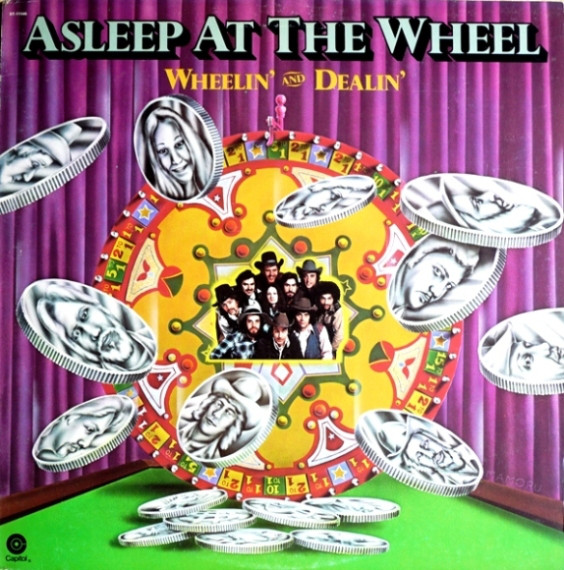


 Posts
Posts

